



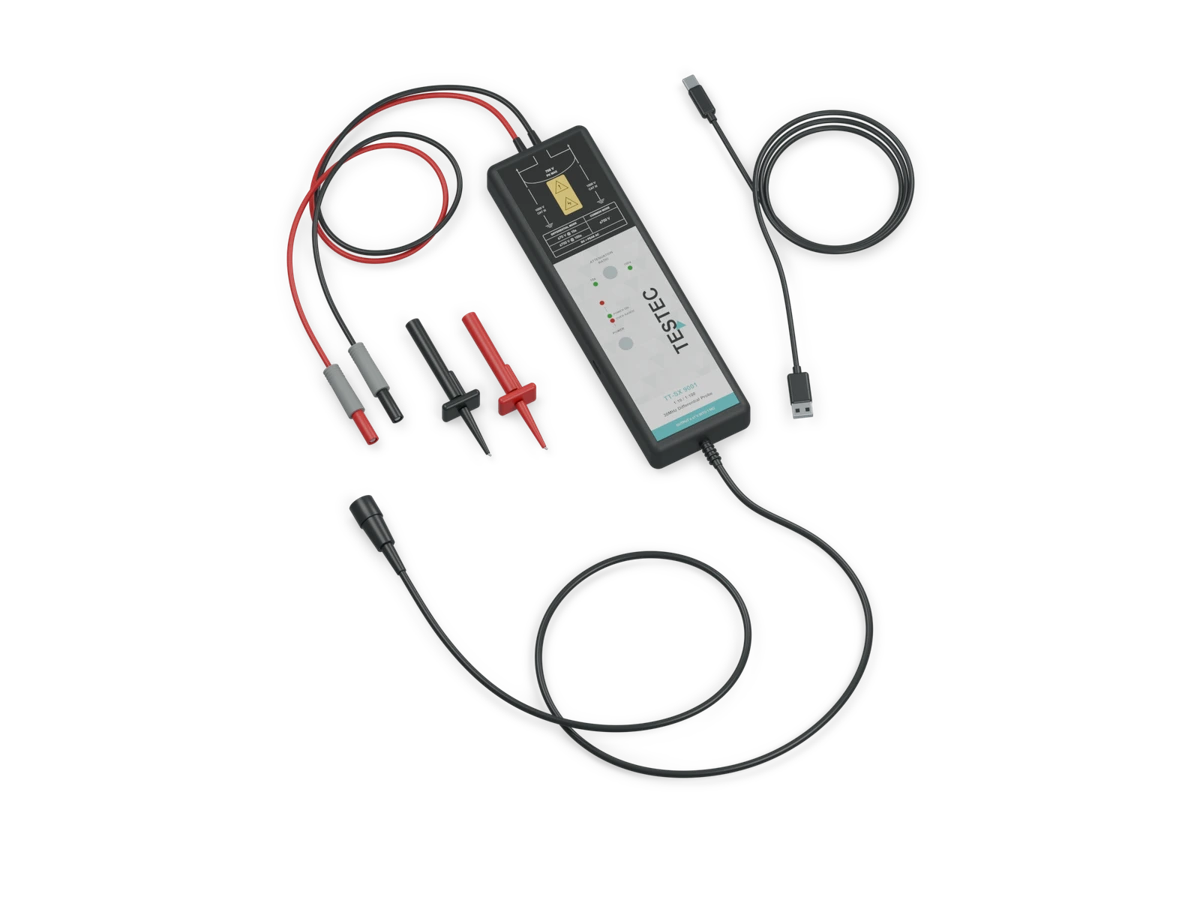
Define the measurement objective
Differential probes measure the voltage between two points, but differential range alone does not describe all operating conditions. Check differential voltage, common-mode voltage, input-to-ground limits and the applicable measurement environment separately. Use the manufacturer’s documentation for each model rather than inferring its operating scope from the product name.
Check the measurement chain
Bandwidth, common-mode rejection, input loading and noise together affect waveform observation. Attenuation must also suit the oscilloscope input and target signal, so that adequate range does not come at the expense of resolving small signals. Compare products under the same measurement conditions, including probe power, output interface and instrument compatibility.
Differential and common-mode quantities are distinct
The voltage between two measurement points is the differential quantity. The part by which both inputs move together relative to a reference potential is part of the common-mode conditions. A small voltage between the points does not imply low input-to-ground voltage. Check differential range, common-mode range and operating environment separately; a higher specification in one cannot compensate for failing another.
Read common-mode rejection in relation to frequency
Common-mode rejection ratio describes how well a probe suppresses a common signal, but it varies with frequency. Fast common-mode transitions at switching nodes differ from slowly changing common-mode conditions. Consult data at the relevant frequency and consider input loading and noise. A low-frequency figure alone does not describe the complete waveform performance.
Match attenuation and resolution to the task
Attenuation brings a signal within the instrument input range, but greater attenuation also reduces the output amplitude of the changes of interest. Small-ripple observation and measurement of a complete high-amplitude waveform may need different approaches. When requesting selection support, provide the overall voltage range, smallest change of interest, target frequency and instrument model, rather than maximum voltage alone.
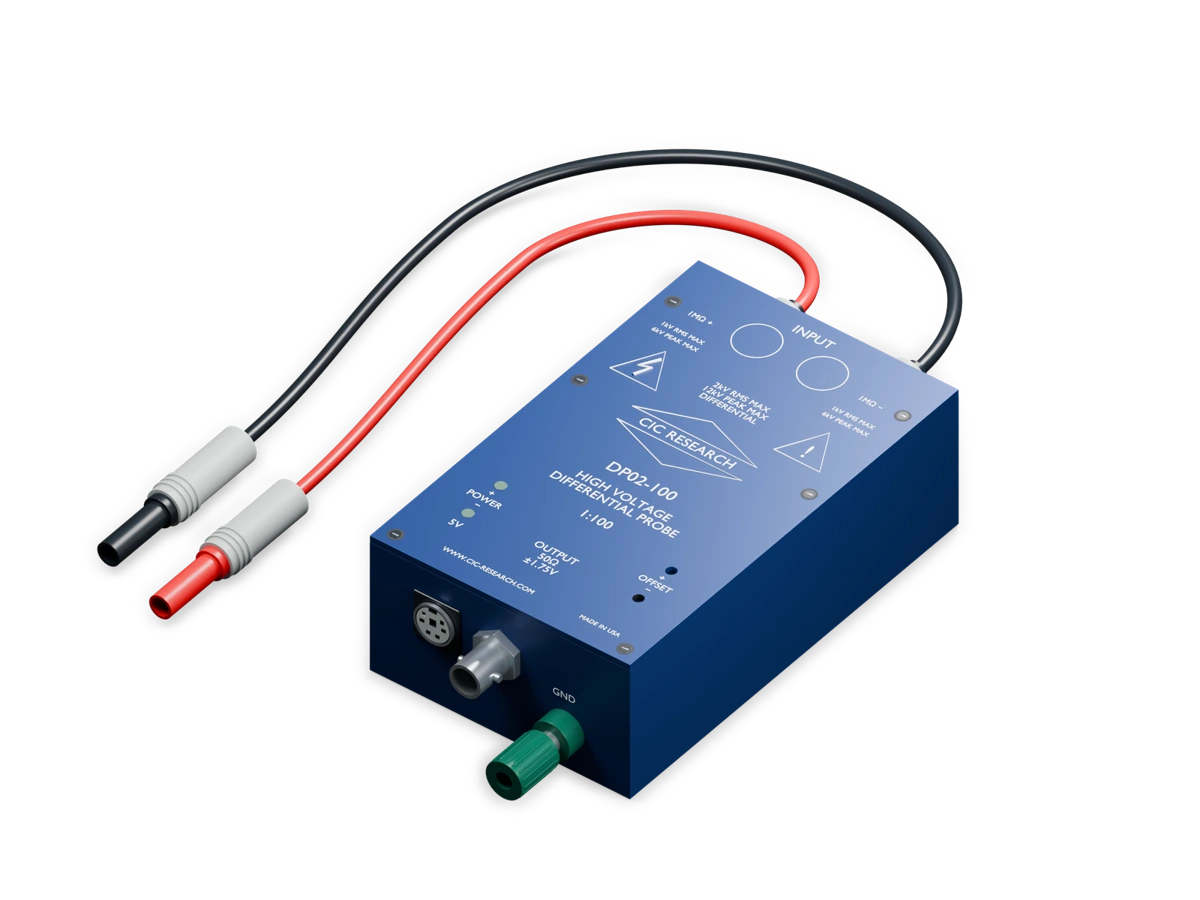
Related products
Need to discuss a measurement setup?
Tell us the measurement target, range and existing equipment so we can review the chain for the actual task.
Continue reading
Technical documents
Wide-Bandgap Switching Tests: Three Limits of the Measurement Chain
Technical documents