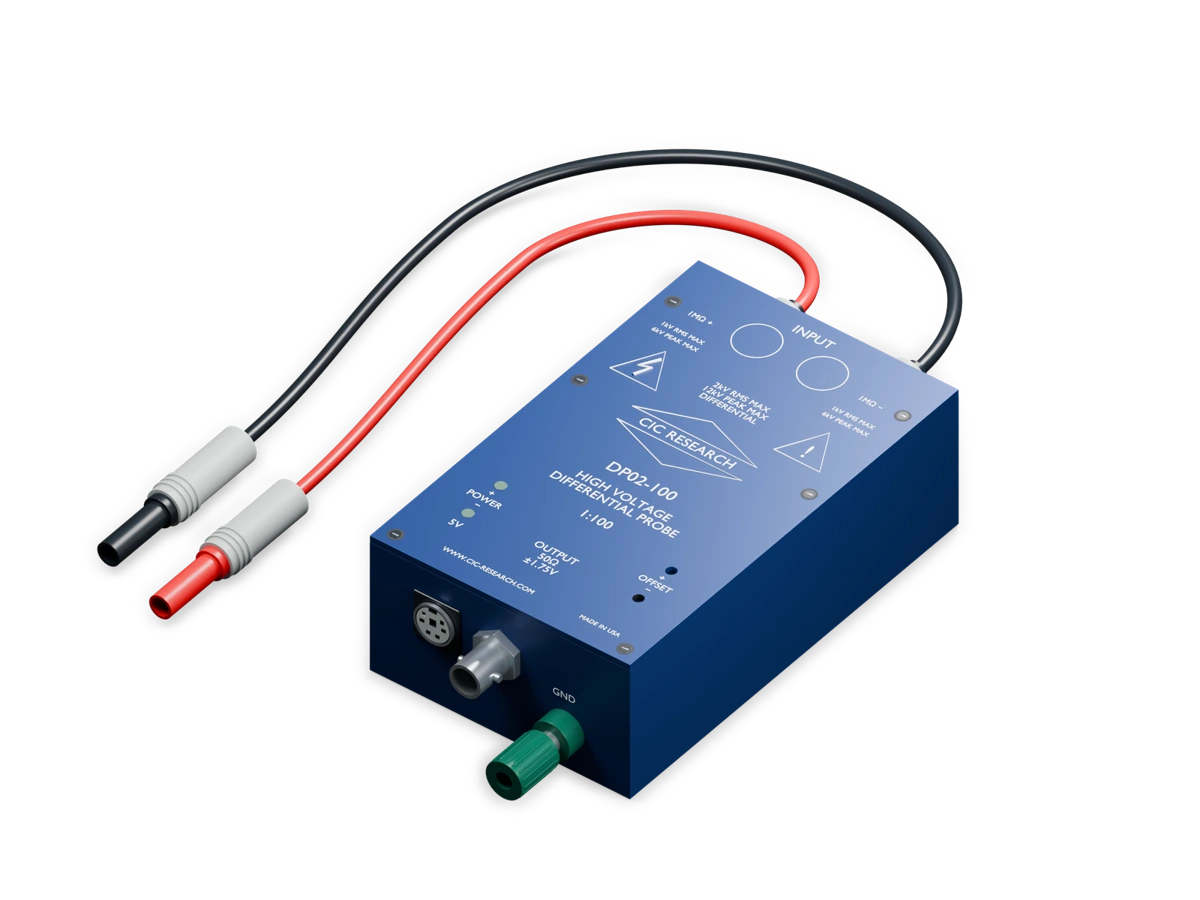
A differential probe measures the voltage between two points, but differential range describes only one condition. Common-mode voltage, input-to-ground limits and frequency response also determine whether the probe works safely and accurately.
Differential and common-mode quantities
The voltage between two points is the differential quantity. The part by which both inputs move together relative to a reference potential is the common-mode quantity. A small differential range does not imply low common-mode conditions; check both.
Frequency and rejection
Common-mode rejection varies with frequency. Fast common-mode transitions at a switching node and slow drift are different challenges. Consult data at the relevant frequency rather than quoting a low-frequency figure only.
Ground limits and safety
Input-to-ground withstand voltage, isolation rating and the applicable environment are safety limits. Exceeding them can damage the probe or the instrument, and reducing the oscilloscope range does not remove the risk.
Write differential, common-mode and ground conditions on one line and compare them with the probe documentation; a single maximum voltage is not enough.
Need to discuss a measurement setup?
Tell us the measurement target, range and existing equipment so we can review the chain for the actual task.